
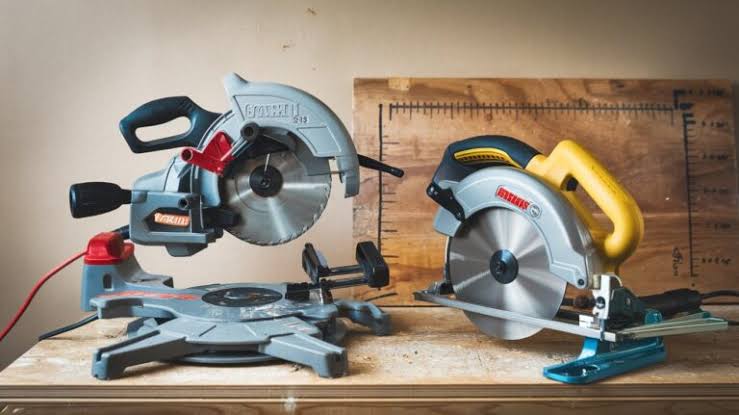
Choosing the right cutting tool can define the quality of every project you take on, whether you’re building custom furniture or framing a new room. When it comes to precision angle cuts, nothing quite matches the capability of a dedicated miter saw. The mitre saws available on the market today offer a remarkable combination of engineering refinement and practical versatility, making them a cornerstone tool in both professional trades and home workshops. Understanding what separates a great saw from an average one—and how different models serve different needs—can save you time, frustration, and wasted material in the long run.
What Makes a Mitre Saw Worth the Investment?
A mitre saw is purpose-built for crosscuts and angled cuts, tasks that would otherwise require significant skill and time with a hand saw or circular saw. The fundamental appeal lies in consistency. Once a cut angle is set and locked, every subsequent cut mirrors it exactly—critical for trim work, crown moulding, and deck framing where even minor deviations accumulate into visible errors.
The mechanism itself is straightforward: a circular blade is mounted on a pivoting arm, which swings down onto a workpiece held against a fixed fence. What elevates premium saws is how precisely that pivot is engineered, how smoothly the bevel adjustments lock in place, and how confidently the blade returns to neutral after each pass. These mechanical subtleties separate a reliable saw from a frustrating one.
Sliding vs. Compound vs. Standard: Understanding the Key Types
Not every workshop requires the same machine. The three main categories—standard, compound, and sliding compound—each occupy a distinct role.
A standard mitre saw excels in environments where the majority of cuts are straightforward crosscuts at common angles. Trim carpenters and flooring installers often rely on them because the fixed-head design is lighter, more portable, and faster to set up on a job site.
Compound models introduce bevel adjustment, allowing the blade to tilt sideways as it pivots downward. This dual-axis movement is essential for cutting crown moulding at compound angles, where both the spring angle and the room corner must be accounted for simultaneously. Without this feature, installers would need to perform mental gymnastics with a flat-head saw to achieve the same cut.
Sliding compound saws extend the reach of the blade horizontally before the cut begins. By riding on rails, the blade can travel across a much wider board, making them indispensable when working with wide planks, stair treads, or large architectural timbers. The tradeoff is size and weight—sliding models require more bench space and careful storage.
The Role of Blade Size in Everyday Performance
Blade diameter directly influences the depth and width of the material a mitre saw can handle. Smaller blades spin faster, producing cleaner cuts in softwoods and thin sheet goods. Larger blades move more slowly but generate the torque required to push through hardwoods, engineered lumber, and thick dimensional stock without bogging down the motor.
Professional cabinetmakers tend to gravitate toward larger blade configurations precisely because the material they cut demands it. Dense hardwoods like white oak, hickory, and maple stress smaller motors significantly, especially during repeated production cutting. A larger saw with a high-amperage motor handles this load without sacrificing cut quality or blade longevity.
For the dedicated home workshop, mid-range blade sizes typically represent the best balance. They handle the full range of residential lumber while remaining manageable to mount on a portable stand and transport between locations.
Dust Collection: A Feature That Pays Dividends Over Time
Sawdust management rarely tops any buyer’s wish list, yet it consistently proves to be one of the most practically important features in daily use. Workshops without effective dust collection face mounting cleaning time, clogged air filters, and—most critically—genuine health risks from fine particulate matter suspended in the air after heavy cutting sessions.
Modern saw designs integrate dust ports of varying diameters, positioned to capture the majority of debris at the point of generation. Connecting a shop vacuum or dedicated dust extractor to this port transforms the cutting environment. Visibility improves, the workpiece stays cleaner, and the saw’s internal components remain free of damaging accumulation.
Some designs incorporate a bag-based collection system directly behind the blade guard. While convenient for mobile work, these bags fill quickly during sustained cutting and never capture as completely as a vacuum-driven system. For stationary workshop setups, a direct vacuum connection consistently outperforms bagged alternatives.
Laser Guides and Digital Readouts: Useful or Gimmick?
The marketing around laser guide systems is occasionally overstated. A laser line projected onto the cut surface can help orient a first cut quickly, but experienced operators generally find that aligning the blade directly with a pencil mark proves equally reliable and requires no calibration. Laser diodes can drift out of alignment over time, and in bright workshop lighting, the projected line sometimes disappears entirely.
Digital bevel and mitre readouts are a different matter. When a job demands precise angle repetition—say, cutting a dozen identical wedge shapes for a decorative pattern—a digital readout eliminates the guesswork of reading a graduated scale. The cost premium for this feature is modest relative to the accuracy it provides, making it a worthwhile consideration for production-oriented workshops.
Setting Up for Accuracy: Why Calibration Matters More Than Brand
Even a well-engineered saw loses its value if the fence is not square to the blade or the detent positions are off. Before trusting any saw—new or used—seasoned professionals run a series of test cuts to verify that the machine is cutting true at its most critical preset angles.
A reliable calibration sequence involves cutting test pieces at ninety degrees and forty-five degrees, then checking the results with a reliable square and protractor. Adjustments to the fence and detent springs bring the machine back into spec. Spending an hour on calibration at setup prevents weeks of subtle errors accumulating across a major project.
The Right Saw for the Work at Hand
Selecting a mitre saw ultimately comes down to an honest assessment of what you regularly cut and where you cut it. Mobile tradespeople prioritize weight and setup speed. Production woodworkers prioritize capacity and motor endurance. Hobbyists benefit most from mid-range saws that provide compound capability without unnecessary bulk.
Investing in the right category from the start—rather than upgrading later—delivers better long-term value and fewer compromises in daily work.
