
Every day dawns with dozens of unexamined marvels. Your phone comprises components manufactured in a dozen countries. The coffee in your cup floated across oceans from remote plantations. The shirt on your back began as bale cotton or oil in territories you’ve never seen. Shielded from view, a vast and ceaseless web of supply chains unites farmers, foundries, cargo vessels, delivery fleets, and distribution centers in an intricate choreography. Silence that network, and within a week modern life collapses.
The Journey Begins with Raw Materials
Supply chains begin with earth and sky. Farmers till the soil. Miners pull ores from subterranean chambers. Pumps send crude to refineries, which alchemize it into countless products. These raw materials form the foundation of everything we use.
Take your smartphone as an example. Lithium for its cell arrives from sprawling salt flats in South America. Rare earth metals traverse continents, extracted in Africa and processed in Asia. According to the folk at Trecora, the plastic case started as hydrocarbons extracted from oil fields, then got processed in chemical plants before reaching electronics factories.
Each basic input progresses along its unique sequence of refining and assembly steps. Crude petroleum becomes small plastic granules. Iron oxide evolves into structural steel. Cotton bolls are ultimately woven into cloth. These conversions are conducted in dedicated plants positioned around the globe, each incrementally increasing the worth of the elemental substances.
Transportation Networks Connect Everything
Moving goods around the planet requires an incredible transportation system. A single container ship, roughly the size of a skyscraper, can stow more than twenty thousand containers. These giants follow regular routes between major ports, creating highways on the water. Cranes and tractors unload containers from the ship in a continuous process.
For loads demanding exceptional speed, terminals at airfields assume the burden. Blooms of orchids from Colombia touch the tarmac of a North American city within forty-eight hours of cutting. Emergency medical kits and semiconductor components are lifted into the cargo hold of a 747, ensuring that inventory and the marketplace keep synchrony.
Warehouses Work Like Giant Puzzles
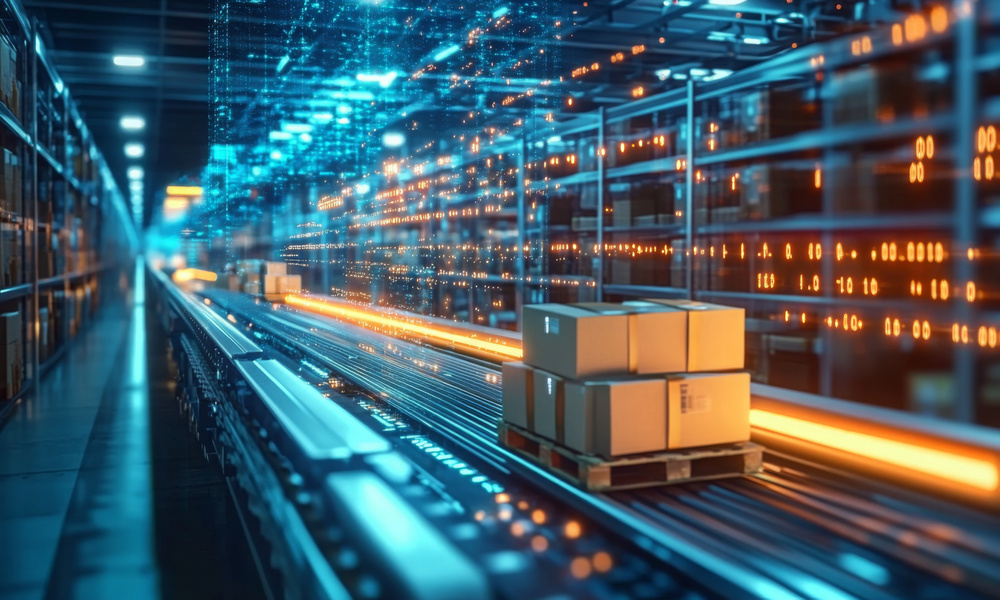
Modern distribution centers are like complex 3D puzzles. Safety-equipped workers and self-driving vehicles move through lengthy aisles. They manage the placement, collection, and arrangement of a multitude of different items. Enterprise resource planning software offers minute-by-minute accountability, logging each item’s current position and the history of its transit, from the loading dock to the outbound lane.
Certain warehouses have grown so expansive that staff cycle between aisles on sturdy bicycles. Robotic systems pull individual SKUs from multistory racks and shunt them to packing cells. Together, these buildings hum night and day, translating online clicks into box-ready freight that awaits the last-mile driver.
Technology Makes It All Possible
Technology upholds the entire operation. Satellites sketch a moving map of their ships. Temperature probes in food containers relay data to keep product within safe ranges. Routing engines churn miles and gallons into optimized paths.
Artificial intelligence edges this forward. If a factory in Asia shuts down for maintenance, computer systems can automatically find alternative suppliers and reroute shipments. The chain flexes, and a skirmish of demand meets preserved viability rather than empty carts.
Conclusion
Supply chains function as the circulatory system of the global economy. They channel the raw materials, components, and finished goods that underpin contemporary life. Before your next buy, just think about the incredible process that brought it to you. From the extraction of raw materials to your hands, that ostensibly insignificant item has traversed a supply chain that stands as one of civilization’s most accomplished feats of organization and coordination.


