
Need a dua for travelling? Look no further. As we embark on journeys near and far, a heartfelt prayer can provide comfort and protection. With the hustle of packing and planning, it’s easy to forget the power of supplication. Whether by land, air, or sea, invoking a dua for travelling can bring peace and blessings to our adventures. Let’s explore the significance and beauty of these sacred prayers that accompany us on our voyages.

Dua for Travelling: A Guide to Seeking Blessings and Protection
Traveling is an exciting adventure that allows us to explore new places, meet different people, and create lasting memories. However, embarking on a journey can also bring about feelings of anxiety and uncertainty. During such times, turning to faith and seeking the blessings and protection of a higher power can provide comfort and reassurance.
In Islam, offering a dua (supplication) before setting out on a journey is a cherished tradition that dates back to the time of Prophet Muhammad (peace be upon him). These prayers serve as a means of seeking guidance, safety, and blessings from Allah, the Most Merciful and Most Compassionate. In this comprehensive guide, we will delve into the significance of dua for traveling, explore different prayers for various stages of the journey, and highlight the etiquettes to observe when making these supplications.
The Importance of Dua for Travelling
Before we delve into specific duas for traveling, let us first understand why these prayers hold such significance in Islam. The act of traveling itself is a manifestation of Allah’s vast creation and an opportunity to witness His signs in the world around us. It is a time when we are vulnerable to the uncertainties that come with being away from the comfort of our homes and communities.
By reciting duas before, during, and after our journey, we acknowledge our dependence on Allah and seek His protection and guidance. These prayers remind us that no matter how carefully we plan our trips, ultimate control rests with the Almighty. Through dua, we express our humility, gratitude, and trust in Allah’s divine plan for us.
Pre-Travel Duas: Setting Off with Faith
As you prepare to embark on your journey, it is advisable to recite specific duas that seek Allah’s blessings for a safe and fruitful trip. One of the most commonly recited prayers before traveling is:
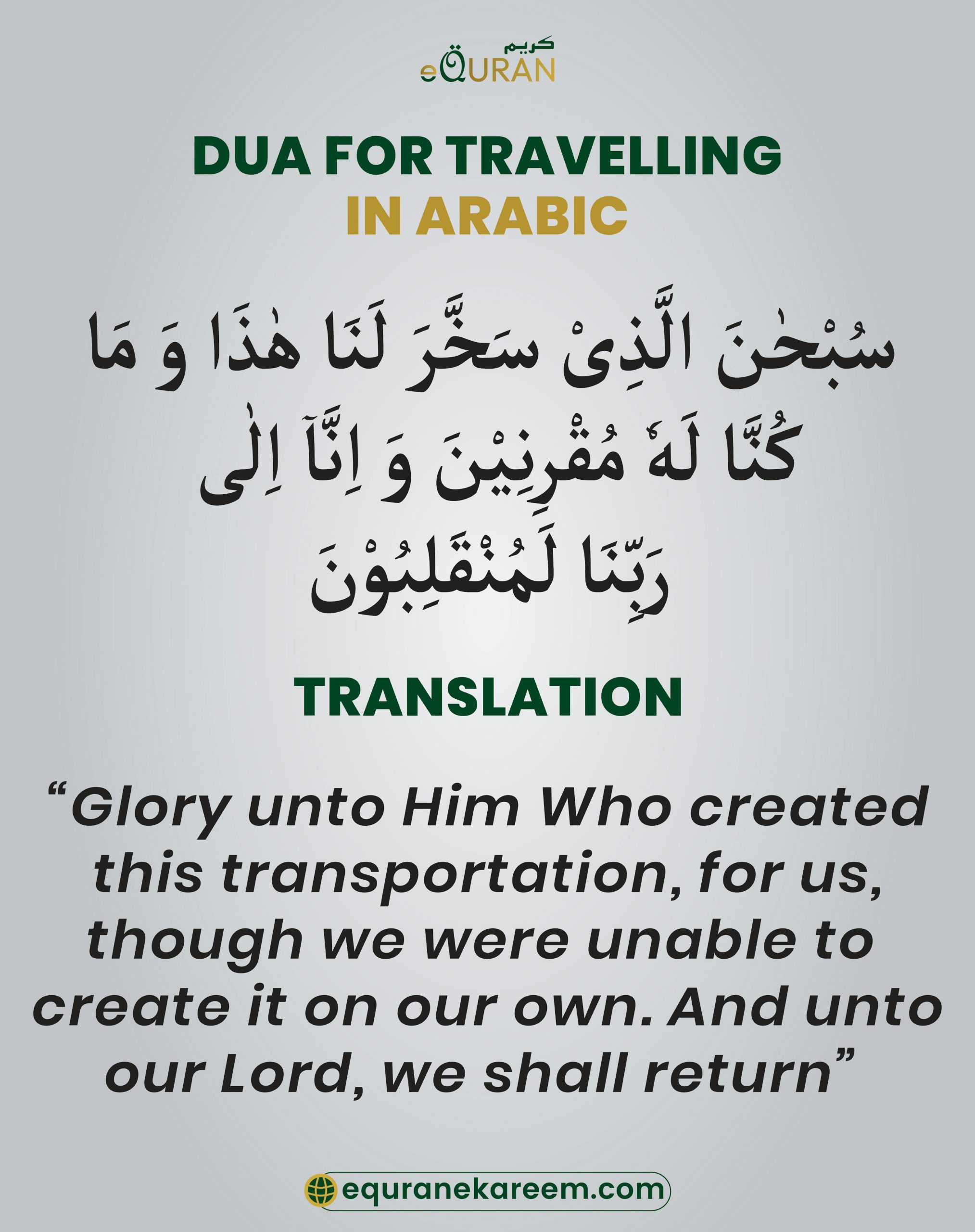
“Subhanalladhi sakhkhara lana hadha wama kunna lahu muqrineen. Wa inna ila Rabbina lamunqaliboon.”
Translation: “Glory to Him who has subjected this to us, and we could never have it (by our efforts). Surely, to our Lord, we are returning.”
Reciting this dua with sincerity and conviction before leaving your home or boarding a mode of transportation instills a sense of trust in Allah’s protection and mercy. It serves as a reminder that all aspects of our journey are under His control, and we are ultimately returning to Him.
Additional Pre-Travel Duas:
– Dua for Setting Out on a Journey:
“Bismillahi tawakkaltu ‘ala Allah, la hawla wala quwwata illa billah.”
Translation: “In the name of Allah, I place my trust in Allah; there is no power or strength except with Allah.”
– Dua for a Safe Journey:
“Allahumma inni as’aluka fi safarina hatha al-birra wal-taqwa, wa minal ‘amalima tarda.”
Translation: “O Allah, I ask You for righteousness and piety in this journey of ours, and for the deeds that please You.”
By incorporating these supplications into your pre-travel routine, you invite the blessings of Allah upon your journey and create a spiritual connection that guides your path.
During-Travel Duas: Seeking Protection and Ease
As you embark on your journey and navigate through various terrains and modes of transportation, it is essential to continue seeking Allah’s protection and guidance. Reciting specific duas during your travel helps maintain a sense of calm and reliance on the Divine throughout the journey.
One of the most recommended duas to recite during travel is:
“Subhanallazi sakhkhara lana hatha wama kunna lahu muqrineen. Wa inna ila Rabbina lamunqaliboon.”
Translation: “Glory be to the One who has placed this (transport) at our service, and we ourselves would not have been capable of that, and to our Lord is our final destiny.”
This dua acknowledges Allah’s role in facilitating our travel and reaffirms our faith in His plan for us. It is a reminder of our ultimate return to Him and the transient nature of our worldly journeys.
Additional During-Travel Duas:
– Dua for a Smooth Journey:
“Subhanal-lathee sakhkhara lana hadha wa ma kunna lahu muqrineen wa inna ila rabbina lamunqaliboon.”
Translation: “Glory to Him who has subjected this to us, and we could never have it (by our efforts). Surely, to our Lord, we are returning.”
– Dua for Protection While Traveling:
“Allahumma hawwin ‘alaina safarana hadha watwi ‘anna bu’dahu.”
Translation: “O Allah, make this journey easy for us and shorten its distance.”
Reciting these duas with mindfulness and sincerity during your travels not only invokes Allah’s protection but also brings a sense of peace and tranquility amid the hustle and bustle of the journey.
Post-Travel Duas: Expressing Gratitude and Seeking Forgiveness
Upon reaching your destination safely and completing your journey, it is important to express gratitude to Allah for His mercy and protection throughout the trip. Engaging in post-travel duas allows you to reflect on the blessings bestowed upon you and seek forgiveness for any shortcomings or mistakes made during the journey.
A recommended dua to recite upon reaching your destination is:
“Subhanal-lathee sakhkhara lana hatha wa ma kunna lahu muqrineen wa inna ila rabbina lamunqaliboon.”
Translation: “Glory to Him who has subjected this to us, and we could never have it (by our efforts). Surely, to our Lord, we are returning.”
By reciting this prayer, you acknowledge Allah’s role in enabling your safe arrival and express gratitude for His guidance and protection throughout the journey.
Additional Post-Travel Duas:
– Dua for a Safe Return:
“Subhanalladhi sakhkhara lana hatha wa ma kunna lahu muqrineen. Wa inna ila Rabbina lamunqaliboon.”
Translation: “Glory be to the One who has placed this (transport) at our service, and we ourselves would not have been capable of that, and to our Lord is our final destiny.”
– Dua for Thanking Allah:
“Alhamdu lillah illadhi hadana li hatha wama kunna linahtadiya lawla an hadana Allah.”
Translation: “Praise be to Allah who guided us to this and we would not have been guided had it not been for Allah guiding us.”
Reciting these post-travel duas with a heart full of gratitude and humility not only acknowledges Allah’s role in your journey but also serves as a means of seeking His forgiveness and mercy.
Etiquette for Reciting Duas for Travelling
While reciting duas for traveling, it is important to observe certain etiquettes to enhance the sincerity and effectiveness of your supplications. Here are some guidelines to follow when making these prayers:
1. **Seeking Permission:** Before reciting any dua, seek permission from those around you to maintain respect and mindfulness.
2. **Facing the Qibla:** Whenever possible, face the direction of the Qibla (the direction of the Kaaba in Mecca) while making your supplications.
3. **Raising Hands:** Raise your hands while reciting duas, as this act symbolizes humility and earnestness in seeking Allah’s blessings.
4. **Consistency:** Make it a habit to recite specific duas for traveling consistently, before, during, and after your journey to maintain a strong connection with Allah.
5. **Sincerity:** Approach dua with sincerity and faith, believing in the power of Allah to grant your requests and protect you throughout your travels.
By adhering to these etiquettes, you can ensure that your duas are made with the utmost sincerity and devotion, inviting the blessings and protection of Allah upon your journey.
In conclusion, reciting duas for traveling is a beautiful practice that connects us with the Divine and seeks the blessings and protection of Allah throughout our journeys. By incorporating pre-travel, during-travel, and post-travel duas into our routines, we acknowledge Allah’s role in all aspects of our travels and express gratitude for His mercy and guidance.
Remember, no journey is undertaken alone when you have Allah by your side. So, as you embark on your next adventure, may you find solace in the power of dua and experience the peace and protection that comes with seeking blessings from the Most Merciful.
Travel safely, dear readers, and may your journeys be filled with blessings and light. Allah-hu Akbar! (Allah is the Greatest!)
Frequently Asked Questions
What is the significance of making dua for traveling?
Making dua for traveling is a way to seek protection and blessings from Allah before embarking on a journey. It is a practice encouraged in Islam to ask for a safe trip, protection from harm, and guidance throughout the journey.
Can you provide an example of a dua for traveling?
An example of a dua for traveling is: “Allahumma inna nas’aluka fi safarina hadha al-birra wa’t-taqwa, wa mina’l-amali ma tarda. Allahumma hawwin alayna safarana hadha watwi anna bu’dahu. Allahumma antas-sahibu fis-safari, wal-khalifatu fil-ahli. Allahumma inni a’udhu bika min wa’thaa is-safari, wa ka’abati al-manthri, wa su’i al-munqalabi fil-mali wal-ahli wal-walad.”
When should I make dua for traveling?
You can make dua for traveling at any time before starting your journey. It is recommended to make this supplication after completing your travel preparations and before setting off on the trip.
Final Thoughts
In conclusion, when embarking on a journey, one should remember the importance of reciting the dua for travelling. This practice not only seeks the protection of Allah but also brings comfort and reassurance during the trip. By turning to this beautiful supplication, travelers can find solace in the belief that they are under divine guidance and care. So, let us never underestimate the power of dua for travelling in bringing blessings and safety to our journeys.

